
Real sofa cleaning prices in Metro Detroit
How Much Does It Cost to Deep Clean a Fabric Sofa?
If you've ever searched for a quote on professional sofa cleaning online, you already know how much does it cost to deep clean a fabric sofa is one of those questions that rarely gets a straight answer. One website says $99. Another says "call for pricing." A third lists a range so wide it's essentially useless. By the time you actually talk to someone, you're not sure whether you're about to be overcharged or whether the low number you saw was ever real. You deserve better than that before you hand over your furniture.
This guide breaks down what professional fabric sofa cleaning actually costs in 2026, by size, fabric type, and condition. It covers what drives prices up, where DIY options make sense, and how to get a fair quote without surprises. At Goodson Steemer, we regularly field pricing questions, and the answer always comes back to the same handful of factors. None of them are complicated once you know what to look for.
What most people actually pay by sofa size
The fastest way to get a ballpark on the cost to deep clean a fabric sofa is to start with size. Most residential upholstery cleaners price fabric sofas as a flat rate per piece, which makes this the most reliable starting point before any other variables come into play.Loveseat and standard three-seat sofas
A loveseat in normal condition typically runs $60 to $120, with most jobs landing around $90. A standard three-seat sofa falls in the $100 to $200 range, with a practical average of $150 to $160. These prices assume hot-water extraction, standard pretreatment, and basic deodorizing included in the base rate. They are flat per-piece prices, not per-seat calculations.
Sectional cleaning costs and oversized pieces
Sectionals are where pricing gets more variable. A sectional cleaning cost for an L-shaped or U-shaped piece typically runs $150 to $300, but companies often price these by section or by seat count rather than as a single flat rate. Heavy pet staining, odor treatment, or a high-cost metro area can push a sectional job to $400 or more. Before accepting any quote on a sectional, ask specifically how they're measuring it so you're comparing apples to apples.
How pricing models actually work
Most residential cleaners use a flat rate per piece for standard sofas, with sectionals moving to a per-seat or per-section model at roughly $25 to $70 per seat. Per linear foot pricing exists but is less common. You'll mostly see it for built-in seating or long commercial benches. Nearly every company also carries a minimum service charge, usually $75 to $150, which applies when you're scheduling a single small piece or the job falls under a certain dollar threshold.
How much does fabric type and soiling level affect the price?
Size gives you a starting number, but fabric type and sofa condition are what actually determine the final upholstery cleaning cost. These two variables account for most of the spread you see between estimates.
Fabric type and the cleaning code on your sofa tag
Check the tag under your sofa cushion or on the frame. It will show a care code: W, S, WS, or X. That code tells a cleaner which methods are safe to use, and it directly affects the price. W-coded fabrics allow water-based extraction and are the least expensive to clean. S-coded pieces require solvent-based methods and typically carry a surcharge. X-coded fabrics limit the cleaner to vacuuming only, meaning deep cleaning simply isn't possible through standard methods.
Fabric material matters too. Microfiber and polyester are standard synthetic pricing, generally $80 to $160 for a sofa. Cotton is moderately higher because it needs controlled moisture and careful drying to prevent shrinkage. Velvet is specialty territory: low-moisture cleaning, directional brushing, and careful handling put it in the $150 to $300 range. Leather is generally not steam-cleaned like fabric; professionals use pH-balanced leather cleaners and controlled methods instead, also typically $150 to $300 or more depending on the piece.
How soiling level changes the scope of the job
Light soil means one cleaning pass and a standard drying time. Set-in stains require pretreatment, spot testing, and multiple extraction passes, which is why most companies quote stain work separately at $15 to $40 per stain as an add-on. Severe pet urine or embedded odors need enzyme treatment and often cushion interior treatment, which can add $30 to $80 or more to the base price. Mold or mildew contamination moves beyond standard cleaning into restoration work, typically $250 to $400 and sometimes requiring a remediation specialist entirely.
Add-on charges that can inflate your final invoice
The base price covers the cleaning method. Everything else is often billed separately, and that's where quotes that looked reasonable on paper can end up higher at checkout. Knowing these line items in advance lets you ask the right questions before work begins.
Common extras companies charge for
Here are the add-ons you're most likely to encounter:
- Stain treatment: $20 to $50 per stain for targeted spot work; multiple or severe stains can reach $40 to $300 total
- Pet odor remediation: $20 to $60 extra using enzyme treatment; severe urine saturation into cushion foam adds more
- Fabric protection coating: $10 to $40 per piece, or roughly $1 to $3 per square foot for specialty applications
- Heavy overall soiling surcharge: $25 to $60 or more for embedded grease, pet hair, or nicotine residue
- Travel or fuel fee: $10 to $50 depending on distance from the company's service area
Furniture moving, stairs, and same-day scheduling can also add to your total. None of these fees are unreasonable when disclosed upfront, but that disclosure needs to happen before work begins, not after.
What "all-inclusive" quotes should actually include
A base price from a reputable company should cover pretreatment and standard deodorizing at minimum. Ask specifically whether stain spotting, odor treatment, and fabric protector are billed separately before you commit to anything. A trustworthy cleaner explains every add-on before the job starts, not after. If a company adjusts your price on arrival without having told you what would trigger additional charges, that's a red flag.
Why truck-mounted equipment cleans deeper than a portable machine
Equipment matters as much as price when you're evaluating competing quotes. Two companies can charge similar rates and deliver very different results depending on what they're rolling up to your house.
What truck-mounted equipment actually does differently
Truck-mounted units run off a separate engine, which means they generate substantially more heat, water pressure, and suction than any portable or rental machine can match running on standard building electrical power. Truck mounts are typically rated to heat water to 210 to 230 degrees Fahrenheit at the machine's heater output, wand temperatures will be somewhat lower after heat loss through the hose, but still significantly higher than what portable units produce. Portable machines operate at lower temperatures, commonly 150 to 180 degrees, with weaker extraction. Less suction means more residual moisture left behind, which means longer drying times and a higher risk of mildew, residue buildup, or fabric shrinkage.
How Goodson Steemer approaches fabric upholstery cleaning
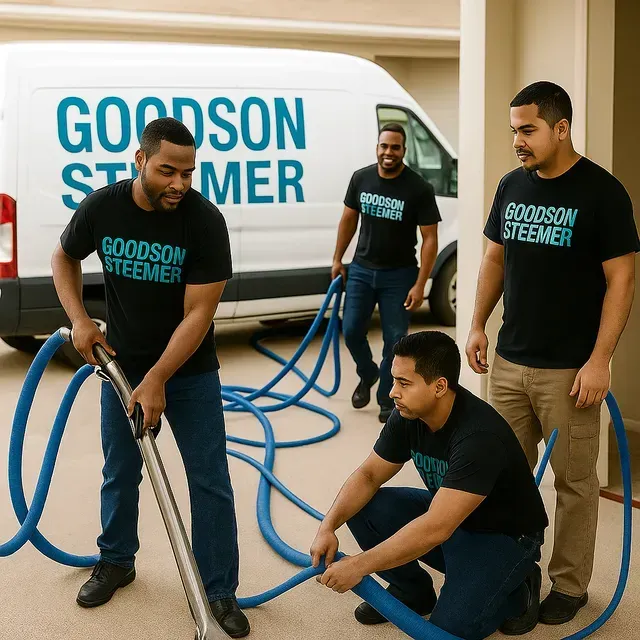
Goodson Steemer uses truck-mounted hot water extraction for upholstery jobs across Metro Detroit. Solutions are matched to your specific fabric and soil type before the job starts, rather than applying one product across the board. Deodorizing is included with every job at no extra charge as part of the company's standard service, and pricing is presented upfront so there are no invoice adjustments after the work is done.
If you're in Livonia, Westland, Canton, Farmington Hills, or anywhere across Oakland, Macomb, Wayne, or Washtenaw County, you can request a straightforward upfront estimate. Knowing your sofa's fabric code and stain history before you call puts you in a much better position to get an accurate number the first time.
DIY, rental machine, or professional: a straight comparison
The right choice depends on what your sofa is dealing with. There's no need to hire a professional for a fresh coffee spill, and there's no rental machine that genuinely handles deep pet urine saturation. Here's how to read the situation.
When DIY products are the right call
Fresh spills and light surface soil are exactly what enzymatic sprays and upholstery brushes are designed for, and $15 to $40 of product handles most of these situations well. The main risk is using the wrong product on the wrong fabric. Check the care code first, and test any spray in an inconspicuous area before you go after the visible stain.
When a rental extraction machine makes sense
Moderate soil on a water-safe fabric is reasonable territory for a rental unit, which typically costs $45 to $75 including solution. The real risks are over-wetting and the drying window: rental machines extract less moisture per pass, so drying can stretch to 12 to 24 hours, and fabrics that hold moisture too long are vulnerable to shrinkage, color bleed, or mildew. Never use a water-based rental machine on anything with an S or X care code.
When professional cleaning is the clear choice
Pet odors, urine saturation, set-in stains, allergen buildup, and delicate fabrics like velvet all belong in professional hands. So does any sofa that's expensive or sentimental enough that you'd genuinely regret a DIY mistake. Professional pretreatment chemistry, stronger extraction, and matched cleaning methods produce better results. The gap widens significantly as the job gets more challenging. The higher upfront cost typically comes with lower risk of damage and a more lasting result.
How to get a fair price to deep clean a fabric sofa and keep the total manageable
A good quote requires a good conversation. The more context you give upfront, the more accurate the estimate you receive. This also protects you from price adjustments that show up after a technician has already assessed your sofa in person.
Questions to ask when getting a professional sofa cleaning estimate
Before agreeing to anything, run through these:
- Is deodorizing included or billed separately?
- How do you handle stains: is spot treatment included in the base price?
- How do you price sectionals: by section, by seat, or flat rate?
- Will you identify the fabric care code before choosing a cleaning method?
- Are there travel fees or minimum service charges?
A cleaner who asks about your fabric type, soiling level, and care code before quoting is doing their job correctly. One who quotes a flat price over the phone without asking any of those questions may be lowballing to get the booking and planning to adjust on arrival.
Practical ways to lower your cleaning bill
Bundling pieces in a single visit is one of the easiest ways to reduce the per-piece cost. Cleaning a sofa, loveseat, and a few dining chairs in one appointment typically runs cheaper overall than scheduling each separately. Many cleaners also recommend routine cleaning every 12 to 18 months as a cost-effective strategy, restoration cleaning every few years once soil and odors are deeply embedded tends to run significantly higher than staying on a maintenance schedule. When you call for a quote, describe your sofa's dimensions, fabric type, and stain history accurately. That allows the company to give you a realistic number upfront rather than recalibrating when they arrive.
The bottom line on fabric sofa cleaning costs
For most fabric sofas in typical condition, the cost to deep clean a fabric sofa runs $100 to $250 depending on size. Fabric type, soiling level, and any add-ons are what push the number higher. A loveseat in good shape lands near the lower end; a heavily soiled sectional with pet odors and a few stains can easily reach $300 to $450 or more.
The equipment a company uses matters as much as the base price. Truck-mounted extraction leaves less moisture behind, cleans deeper into upholstery fibers, and consistently delivers better results than portable alternatives. Those differences come directly from the heat output, water pressure, and suction capacity that truck-mounted systems provide over portable units.
If you're wondering how much does it cost to deep clean a fabric sofa in Metro Detroit and want a straightforward, transparent estimate, reach out to the Goodson Steemer team. Bring your sofa's size, care code, and a quick description of any stains or odors, and you'll get an honest number without the guesswork.